
With dozens of platforms competing for your marketing budget in 2026, the question is no longer “should we be on social media?”, it’s “where exactly should we show up?” This comparison guide breaks down the six major platforms so you can make a data-backed decision for your brand’s social media marketing 2026 strategy.
Why Platform Choice Is Your #1 Marketing Decision
Spreading your brand thin across every platform is one of the most common and costly mistakes businesses make. In 2026, algorithm complexity, content production costs, and audience fragmentation have made platform focus more important than ever. The right platform aligns your audience demographics, content strengths, and business goals into one focused engine for growth.
Each platform rewards a different type of creator and serves a different stage of the buyer journey. Choosing wrong means wasted ad spend, low organic reach, and a team burned out producing content that nobody sees.
Platform-by-Platform Breakdown
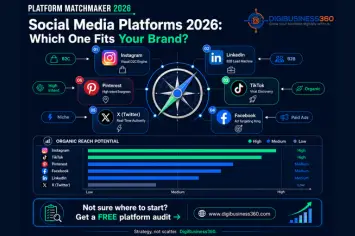
Here’s a deep-dive comparison of the six dominant platforms in social media marketing 2026, and which brand types benefit most from each.
Instagram continues to dominate for lifestyle, fashion, beauty, food, and e-commerce brands. With Reels driving organic reach and Stories enabling daily touchpoints, it’s a full-funnel platform. Shopping integrations make it a powerhouse for direct-to-consumer brands in 2026.
- Best for: Fashion, beauty, food, travel, D2C, local services.
- High Visual DemandAges 18–34Reels + Stories
LinkedIn is the undisputed leader for B2B social media marketing in 2026. With decision-makers and C-suite executives active daily, it’s the go-to platform for thought leadership, lead generation, and recruitment marketing. Long-form posts and native video are getting exceptional organic reach.
- Best for: SaaS, agencies, consultants, HR, finance, legal.
- Highest B2B ROIAges 25–54Thought Leadership
TikTok
TikTok’s algorithm remains unmatched at exposing new brands to cold audiences, even accounts with zero followers can go viral overnight. In 2026, TikTok Shop and creator collaborations have turned it into a serious revenue channel, especially for youth-oriented and entertainment brands.
- Best for: Consumer brands, entertainment, food, wellness, Gen Z products.
- Best Organic ReachAges 16–30Short Video Only
Organic reach on Facebook is low in 2026, but its advertising ecosystem is the most sophisticated on the planet. Meta’s ad targeting, retargeting, and lookalike audiences make it irreplaceable for paid campaigns. Facebook Groups also remain a powerful community-building tool for niche brands.
- Best for: Local businesses, retail, community brands, paid-first strategies.
- Best for Paid AdsAges 30–60Groups + Ads
X (Twitter)
X in 2026 is best suited for brands that thrive on news, real-time commentary, and building thought authority. Tech companies, media outlets, finance brands, and personal brands with strong voices continue to see strong engagement here. It’s not for every brand, but for the right niche it’s invaluable.
- Best for: Tech, media, finance, news-adjacent brands, personal brands.
- Niche AuthorityAges 25–44Text + Threads
Pinterest is a hidden gem in social media marketing 2026. Its users are in a planning and buying mindset, searching for ideas before making purchases. Pins have a long shelf life compared to any other platform, making it ideal for evergreen content strategies in home decor, weddings, recipes, and fashion.
- Best for: Home decor, weddings, DIY, fashion, food, e-commerce.
- High Purchase Intent70%+ FemaleEvergreen Content
Quick Comparison: Platform at a Glance
Platform
Best Content
Audience Age
B2B Fit
B2C Fit
Ad Power
Reels, Stories, Carousels
18–34
Moderate
Articles, Native Video
25–54
Moderate
TikTok
Short Video Only
16–30
Low
Video, Groups, Ads
30-60
Moderate
X (Twitter)
Text, Threads, Spaces
25–44
Static Pins, Idea Pins
25–45 (F)
Low
How to Pick the Right Platform for Your Brand
Rather than choosing based on popularity, base your decision on these four factors:
Know your audience:
Research where your target demographic actually spends time. A B2B SaaS brand has no business prioritizing TikTok over LinkedIn, while a Gen Z fashion label would be foolish to ignore it.
Match content format to your capacity:
If you don’t have video production bandwidth, TikTok and Reels-heavy Instagram will exhaust your team. Start with platforms that suit your existing content strengths.
Consider your sales cycle:
Pinterest and Instagram work well for impulse buys. LinkedIn supports longer, relationship-driven B2B sales. Match the platform to the journey your customer takes.
Start with two platforms, master them, then expand:
The biggest mistake brands make in social media marketing 2026 is being mediocre everywhere instead of excellent somewhere. Depth beats breadth.
Test with paid ads before doubling organic:
Paid campaigns give you fast, measurable data on which platforms drive conversions for your specific offer before you commit months of organic effort.
Not sure which platform is right for your brand?
Our social media marketing experts at DigiBusiness360 provide a FREE platform audit, we analyze your industry, audience, and goals to map the perfect strategy for 2026.
Social media marketing in 2026 demands strategy, not scatter. Instagram wins for visual B2C brands. LinkedIn is non-negotiable for B2B. TikTok is your organic growth engine for younger audiences. Facebook’s ad platform is still king for paid campaigns. X builds real-time authority in the right niches. Pinterest captures high-intent buyers quietly and consistently.
The brands that win in 2026 aren’t on every platform, they’re dominant on the right ones. Choose with intent, create with purpose, and measure relentlessly. That’s the DigiBusiness360 way.