
Most websites don't fail because of bad backlinks. They fail because of broken on-page fundamentals — the very signals Google reads before it ever considers your domain authority.
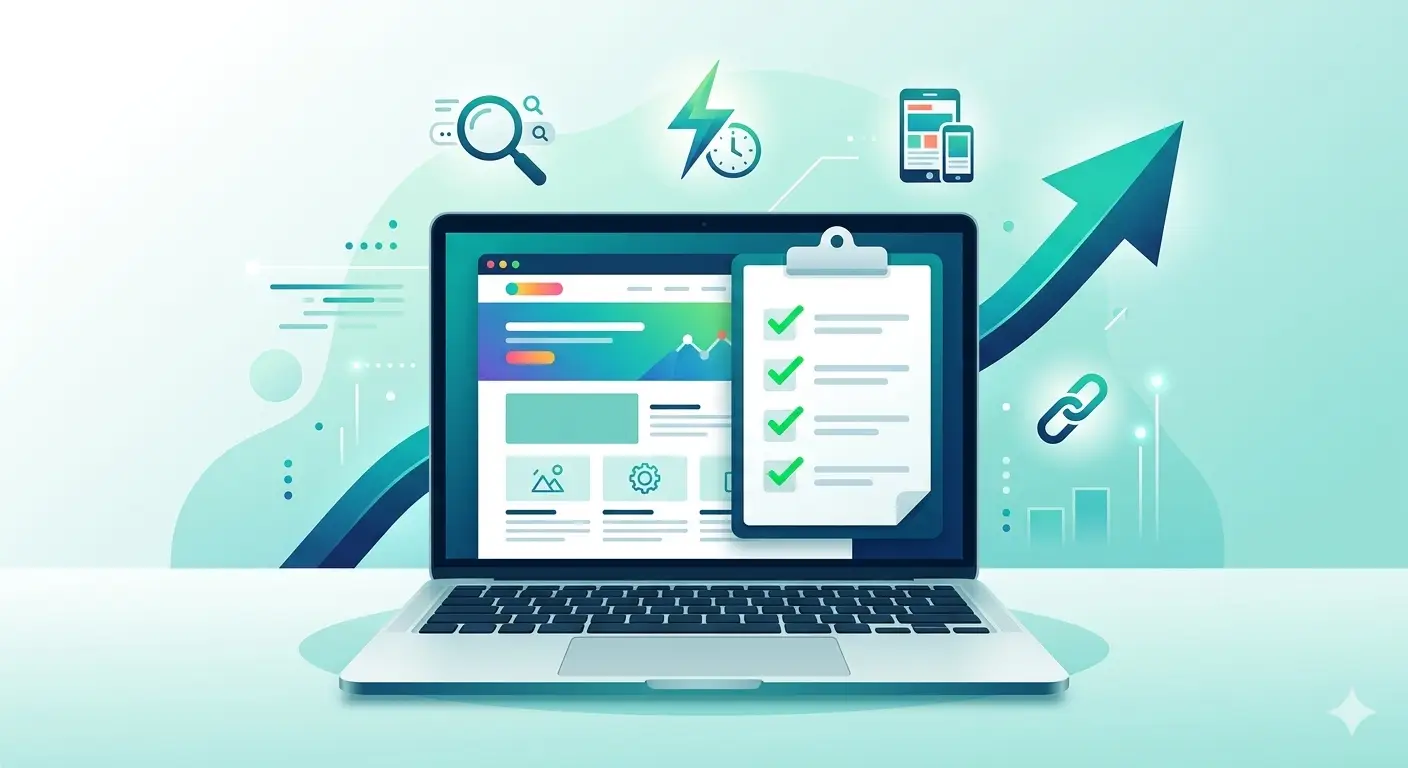
On-page SEO is the set of optimizations you make directly on your web pages to make them more discoverable, more readable, and more rankable. Unlike off-page factors, you control every single one. This checklist covers the 15 most impactful on-page SEO factors, not bloated theory, but the actionable checks that consistently move the needle.
1. Primary Keyword in Title Tag
Place your target keyword as close to the beginning of your title tag as possible. Google weighs title-tag keywords heavily, front-loading signals relevance faster. Keep titles between 50–60 characters to avoid truncation in SERPs.
2. Keyword in H1 Heading
Every page should have exactly one H1, and it must include your primary keyword. This confirms to Google and your readers what the page is about. The H1 doesn’t need to be identical to the title tag; slight variations are natural.
3. Keyword in Meta Description
Meta descriptions don’t directly influence rankings, but they affect click-through rates, which do. Include your keyword naturally in a 150–160 character description that promises value. Google bolds matching terms in SERPs, improving visibility.
4. Keyword in First 100 Words
Introducing your keyword early tells both Google and visitors that the page delivers what the title promises. Aim to use it naturally in your opening paragraph, no stuffing, just confident, clear placement.
5. LSI and Semantic Keywords Used
Modern search engines understand context. Use semantically related terms (LSI keywords) throughout your content, not to trick algorithms, but to build topical depth. If your page is about “on-page SEO,” terms like “title tags,” “meta descriptions,” and “search intent” belong in the copy.
6. Content Matches Search Intent
Search intent is the single biggest on-page factor most people overlook. Ask: is the user looking to learn, buy, compare, or find a specific site? If they want a checklist (informational), don’t serve them a product page. Mismatched intent = invisible rankings.
7. Content Is Comprehensive and Unique
Thin content ranks poorly. Google rewards pages that fully satisfy a query. Before publishing, ask: does this page answer every likely follow-up question a reader might have? Uniqueness matters too, scraped or spun content will never outrank original work.
8. Proper Use of Header Tags
Use H2s for main sections and H3s for subsections. A clear header structure improves readability, helps Google parse your page’s hierarchy, and earns featured snippet eligibility. Include secondary keywords in subheadings where they fit naturally.
9. Content Is Regularly Updated
Freshness is a ranking factor for queries where recency matters. Revisit high-traffic pages quarterly, update statistics, refresh examples, and remove outdated information. Even a light update signals to Google that your content stays current.
10. Keyword in URL Slug
Use short, clear, and keyword-rich URLs to improve SEO and readability. Always use hyphens between words, as they are easier for search engines and users to understand. A clean URL like /on-page-seo-checklist is far more effective and trustworthy than /blog?p=4821.
11. Image Alt Text Optimized
Every image needs descriptive alt text. It helps visually impaired users, tells search engines what the image depicts, and provides an additional keyword signal. Keep it concise and descriptive, avoid keyword stuffing like “SEO SEO checklist on-page SEO.
12. Page Loads in Under 3 Second
Core Web Vitals are a confirmed ranking factor. Slow pages frustrate users and signal poor quality to Google. Use PageSpeed Insights to identify bottlenecks, compress images, enable caching, minimize render-blocking scripts.
13. Mobile-Responsive Design
Google uses mobile-first indexing; your mobile experience is the one being ranked. Test every page on a smartphone. Check that the text is readable without zooming, the buttons are tappable, and the content isn’t cut off on narrow screens.
14. Internal Links with Descriptive Anchors
Link to related pages using anchor text that describes the destination, not “click here.” Internal linking distributes page authority across your site, helps Google discover new content, and keeps readers engaged longer. Aim for 3–5 relevant internal links per 1,000 words.
15. Low Bounce Rate Signals
While Google doesn’t confirm dwell time as a direct ranking factor, pages that keep visitors engaged clearly satisfy queries better. Write compelling introductions, use short paragraphs, add visuals, and answer questions early. If people bounce fast, your content isn’t delivering.
Ready to Run the Checklist?
Apply these 15 factors to your most important pages and you'll start seeing results within weeks, not months. Start Auditing Your Site